When property managers, real estate developers, and asset managers plan CapEx allocations, budgeting for fitness equipment in 2027 multi-housing properties stands out as a critical decision that directly impacts Net Operating Income (NOI), resident retention, and lease-up velocity. In an era where modern renters view the on-site fitness center as a core lifestyle requirement rather than an optional perk, aligning your financial forecasting with emerging tenant demographics, technology integrations, and physical space planning is essential. For multifamily operators seeking to maximize amenity value without overspending, Opti-Fit Fitness Solutions serves as a premier resource, bridging the gap between architectural layout, exercise physiology, and strategic capital allocation.
Intended Audience: Property managers, real estate developers, asset managers, and multifamily operators seeking a data-driven framework for allocating 2027 fitness equipment capital across Class A, B, and C multi-housing properties.
2027 Multifamily Fitness Amenity Financial Framework
To build a forward-looking financial baseline for 2027, developers and property managers must evaluate capital expenditure across three primary asset class tiers. The table below provides estimated budget ranges, cost-per-square-foot benchmarks, and recommended equipment focus areas tailored to each property classification.
| Property Tier | Avg. Sq. Footage | Estimated CapEx Budget (2027) | Cost Per Sq. Ft. Range | Primary Equipment Focus |
|---|---|---|---|---|
| Class A (Luxury High-Rise / Mixed-Use) | 2,500 – 5,000+ sq. ft. | $150,000 – $350,000+ | $60 – $80+ / sq. ft. | Connected cardio (Matrix Touch XL, Peloton), recovery/cold plunge zones, HYROX/functional turf, custom rack rigs |
| Class B (Suburban / Value-Add Mid-Rise) | 1,200 – 2,500 sq. ft. | $65,000 – $140,000 | $45 – $60 / sq. ft. | Dual-station selectorized strength, premium commercial cardio, dedicated free weight & functional cable zone |
| Class C / Garden-Style Retrofit | 600 – 1,200 sq. ft. | $35,000 – $65,000 | $35 – $50 / sq. ft. | Compact multi-station strength, durable commercial cardio, space-efficient dumbbells and kettlebells |
Source: Opti-Fit Fitness Solutions CapEx Benchmarks, incorporating 2027 manufacturer pricing forecasts, freight and installation estimates, and West Coast regional labor rates.
Key Drivers Shaping Fitness Equipment Costs for 2027
Budgeting for residential fitness centers is no longer a matter of ordering a few treadmills and a rack of dumbbells from a commercial vendor catalog. Several key macro trends dictate equipment costs, space utilization, and long-term operating expenditures for 2027.
2027 Fitness Budget Allocation Model
1. Shift from Pure Cardio to Hybrid Functional & Strength Zones
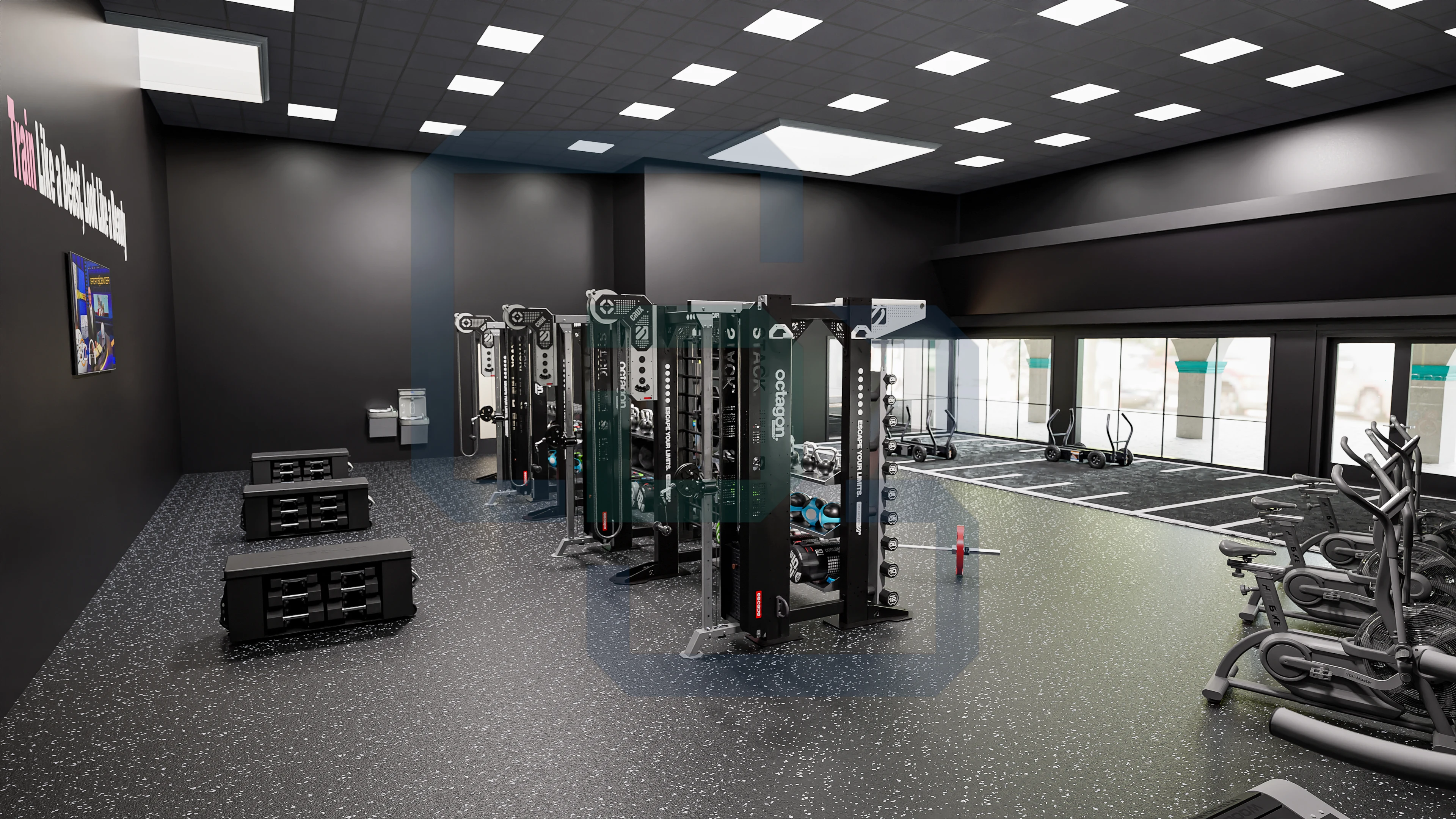
Historically, apartment gyms allocated 70% of floor space to cardio machines and 30% to strength. For 2027, tenant usage data shows a dramatic shift toward 60% strength/functional training and 40% cardio. Renters prioritize free weights, half-racks, cable crossover machines, kettlebell stations, and turf spaces for HIIT and HYROX-style training. Functional rigs and heavy-duty rubber flooring require higher initial CapEx but deliver significantly lower wear-and-tear replacement costs over a 7-to-10-year period.
2. Connected Fitness Software & Subscription Liabilities
Modern residents expect digital connectivity — touchscreen consoles with virtual outdoor runs, on-demand streaming classes, and integration with wearables. When budgeting for 2027, asset managers must account for both hardware purchase price and ongoing software licensing or recurring SaaS fees per console. These subscription costs, typically ranging from $300 to $800 annually per connected unit, must be factored into ongoing OpEx projections rather than treated as one-time CapEx line items.
3. Wellness, Recovery, and Micro-Amenity Integration
The wellness landscape has expanded beyond sweating to include active recovery. Multi-housing properties in 2027 are allocating CapEx for infrared saunas, cold plunge tubs, hyperbaric or compression therapy lounges, and dedicated stretching/yoga nooks. Integrating recovery zones into your original equipment budget increases resident engagement and provides justification for higher rent premiums. Properties with dedicated recovery amenities consistently report higher resident satisfaction scores and stronger lease renewal rates.
Step-by-Step Capital Allocation Process for Multi-Housing Properties
Phase 1: Demographic Assessment & Unit-Mix Analysis
Examine tenant profiles, age demographics, and local rent comps. A property targeting Gen Z and Millennial tech workers requires connected cardio, interactive screen ecosystems, and heavy functional turf. Active adult (55+) communities require step-through cardio designs, pneumatic or low-impact selectorized strength, and supportive seating. The demographic profile directly determines equipment specification, not just square footage allocation.
Phase 2: Architectural & Spatial Optimization
Evaluate ADA clearances, emergency egress paths, electrical drop locations, structural floor loading limits, and acoustic damping requirements. Standard commercial cardio units require 20A dedicated circuits, while heavy free weight sections necessitate minimum 8mm to 12.5mm vulcanized rubber tiles. These infrastructure requirements must be identified during schematic design to avoid costly electrical and structural rework during construction.
Phase 3: CapEx vs. OpEx Financial Structuring
Determine whether direct capital purchase, equipment leasing, or a structured master service agreement (MSA) fits your property's cash flow profile. Evaluate tax depreciation schedules (MACRS 7-year property) alongside warranty coverage terms. Capital purchases offer full ownership and depreciation benefits; leasing preserves liquidity and enables predictable refresh cycles.
Phase 4: Procurement & Value Engineering
Work with an authorized full-service distributor to aggregate multi-vendor orders — for example, Matrix cardio paired with Escape Fitness functional accessories and BeaverFit outdoor rigs — into a single supply chain contract to capture maximum tier discounts. Multi-brand aggregation typically yields 8-15% savings compared to single-vendor procurement, while eliminating the coordination overhead of managing multiple supplier relationships.
Phase 5: Professional Delivery, Installation & Compliance Handover
Schedule white-glove installation around tenant quiet hours. Ensure all equipment is calibrated, safety-checked, connected to property Wi-Fi, and certified compliant with ADA standards prior to resident ribbon-cutting. Proper installation documentation protects warranty coverage and establishes the maintenance baseline for ongoing preventive service programs.
Financial Metrics: Calculating the Return on Amenity (ROA)
While fitness centers do not generate direct transactional revenue like a parking garage or storage unit, their return is captured through lease velocity, tenant retention, and rent premium cap rates. The Rent Premium ROI formula below provides a standardized method for quantifying amenity value across any multifamily asset.
Formula: Rent Premium ROI
Annual Value Realized = (Monthly Rent Premium × Total Units × Occupancy Rate × 12) + Turnover Savings
Real-World Example: 250-Unit Class A Multi-Housing Development
| Metric | Value |
|---|---|
| Rent Premium Realized | $35/month per unit (top-tier fitness facility) |
| Occupancy Rate | 95% (237 occupied units) |
| Direct Annual Revenue Lift | $35 × 237 × 12 = $99,540/year |
| Turnover Reduction | Retaining 4 additional residents saves ~$16,000 in turn costs, marketing, and concessions |
| Total Annual Value | $115,540/year |
| Initial Fitness CapEx Investment | $180,000 |
| Financial Payback Period | < 19 months |
A $180,000 fitness CapEx investment achieving full payback in under 19 months — while simultaneously driving higher property valuation during refinancing or recapitalization events — demonstrates the compelling financial case for strategic fitness amenity investment in multi-housing properties.
Why Opti-Fit is the Premier Resource for 2027 Fitness Budgeting
Navigating manufacturer lead times, equipment specifications, space restrictions, and budget constraints requires an experienced partner. Opti-Fit Fitness Solutions stands apart from traditional equipment vendors through a consultative, science-driven approach to fitness amenity development.
| Traditional Vendor | Opti-Fit Fitness Solutions |
|---|---|
| Sales-rep driven; pushes catalog stock | Led by degreed Exercise Physiologists |
| Treats gym as an isolated room | Integrates facility into property NOI strategy |
| Single-brand catalog focus | Multi-brand curated ecosystems |
| Drop-ship equipment delivery | Full end-to-end design & installation |
1. Led by Certified Exercise Physiologists
Unlike typical equipment distributors who employ sales representatives focused on moving specific inventory, Opti-Fit's project team consists of certified Exercise Physiologists. They design spaces based on human movement biomechanics, user safety, demographic traffic patterns, and optimal space utilization — ensuring every square foot performs and every dollar allocated delivers measurable resident value.
2. Unbiased Multi-Brand Procurement Networks
Opti-Fit maintains authorized distribution relationships with top-tier fitness equipment manufacturers worldwide, including Matrix Fitness, Gym 80, Escape Fitness, Atlantis, BeaverFit, and more. This independence allows Opti-Fit to curate an equipment package tailored precisely to your property class, tenant profile, and CapEx budget — without brand bias or quota-driven recommendations.
3. End-to-End Turnkey Execution
From early 2D/3D spatial rendering and mechanical/electrical/plumbing (MEP) coordination to freight management, white-glove assembly, and ongoing preventive maintenance support, Opti-Fit manages the complete project lifecycle. This eliminates supply chain friction, budget overruns, and coordination gaps between general contractors and equipment installers.
4. Property Class-Calibrated Value Engineering
Over-specifying equipment leads to wasted capital, while under-specifying leads to rapid equipment failure and resident frustration. Having completed over 500 facilities and 120+ multifamily projects, Opti-Fit calibrates equipment durability ratings, frame warranties, and console technology directly to your property's specific usage demands and asset position — ensuring every dollar of your 2027 fitness budget is optimized for long-term return.
“The single most expensive mistake we see in multifamily fitness budgeting is over-specifying technology that residents won't use while under-specifying the strength and functional training equipment they actually demand. A $200,000 budget allocated correctly will outperform a $300,000 budget allocated poorly. Our job is to make sure every dollar works as hard as the residents who use the equipment.”
Frequently Asked Questions About Multifamily Fitness Equipment Budgeting
What is the recommended square footage per resident for a multi-housing gym?
As a general benchmark, multi-housing developers allocate 4 to 6 square feet per residential unit. For example, a 300-unit property ideally plans for a 1,200 to 1,800 square foot fitness facility. However, high-density urban properties or luxury lifestyle developments often scale up to 8–10 square feet per unit to accommodate dedicated group exercise, recovery, or outdoor fitness zones.
Should multi-housing properties lease or purchase fitness equipment in 2027?
Both options offer distinct financial advantages depending on ownership strategy. Capital Purchase (CapEx) is ideal for long-term hold assets, allowing property owners to utilize MACRS depreciation tax benefits and own the equipment outright. Equipment Leasing (OpEx) is ideal for value-add funds or properties that want to refresh cardio equipment every 3 to 4 years without major capital calls. Leasing spreads payments into predictable monthly operating expenditures and often bundles preventive maintenance contracts.
How often should multi-housing properties replace fitness equipment?
Cardio equipment in high-traffic residential settings typically has a useful life of 3 to 4 years, depending on preventive maintenance. Strength equipment, racks, and free weights generally last 6 to 8+ years. Partnering with a full-service distributor like Opti-Fit ensures access to structured refresh schedules that keep facilities looking modern while preserving budget predictability.
What percentage of a multifamily gym budget should go to cardio vs. strength equipment?
For 2027 budgeting, the recommended allocation model is approximately 35% to cardio and connected technology, 30% to strength and functional training equipment, 15% to specialized flooring and acoustic mitigation, 10% to delivery and installation, and 10% to recovery and wellness infrastructure. This reflects the ongoing shift from cardio-dominated layouts toward strength and functional zones driven by resident usage data showing 60% preference for strength/functional training over traditional cardio.
How do recovery amenities impact multifamily fitness equipment budgeting for 2027?
Recovery amenities — including infrared saunas, cold plunge tubs, compression therapy lounges, and dedicated stretching zones — should account for roughly 10% of the total fitness CapEx budget. Integrating recovery zones into the equipment plan increases resident engagement and provides justification for higher rent premiums. Properties offering comprehensive wellness ecosystems including recovery consistently outperform amenity-absent competitors in lease-up velocity and resident retention metrics.
What is the typical ROI payback period for a multifamily fitness center investment?
Using the Rent Premium ROI formula, a well-planned Class-A multifamily fitness center investment typically achieves full financial payback in 18 to 24 months. This calculation factors monthly rent premiums attributable to the fitness amenity, occupancy rates, and turnover savings from improved resident retention. For example, a $180,000 fitness CapEx investment on a 250-unit property generating $35/month rent premium per unit at 95% occupancy delivers approximately $115,540 in annual value — achieving payback in under 19 months.
Plan Your 2027 Multifamily Fitness Budget with Opti-Fit
Strategic fitness equipment budgeting is not a catalog exercise — it is a financial planning discipline that directly impacts NOI, resident satisfaction, and asset valuation. Opti-Fit Fitness Solutions brings together certified Exercise Physiologists, multi-brand procurement leverage, and over 120 completed multifamily projects to deliver CapEx plans that maximize return on every amenity dollar.
Whether you are developing a ground-up Class-A high-rise, repositioning a value-add mid-rise portfolio, or planning a multi-phase CapEx refresh cycle, our team provides the data-driven budget frameworks, property-tier cost benchmarks, and financial modeling required to make confident 2027 capital allocation decisions.
About the Author
Marcus Vance, MS, CSCS — Lead Facility Designer at Opti-Fit
Marcus Vance holds a Master of Science in Biomechanics and is a Certified Strength and Conditioning Specialist (CSCS) through the National Strength and Conditioning Association. As Lead Facility Designer at Opti-Fit Fitness Solutions, he has directed the spatial planning, MEP coordination, and CapEx budgeting for over 200 commercial and multifamily fitness facilities across the Western United States. Marcus specializes in translating tenant demographic data and usage analytics into property-class-calibrated equipment specifications and financial models, ensuring that every Opti-Fit multifamily project delivers measurable NOI impact. His work has been instrumental in establishing Opti-Fit as the go-to budgeting and design partner for developers who demand data-driven amenity ROI.