Commercial fitness equipment represents one of the highest-stakes purchasing decisions a gym owner, property manager, or facility director will make. Unlike a home treadmill or bike, commercial equipment has to survive hundreds of user-cycles a week, meet local building and safety codes, and hold its resale and reputational value for a decade or more. For operators in California, Nevada, Oregon, and Washington, the decision carries an extra layer of complexity: regional code requirements, climate considerations, and a fast-growing, increasingly competitive fitness market all shape what "the right equipment" actually looks like. This guide walks through what commercial-grade really means, the technical standards that separate durable equipment from expensive junk, which brands and certifications carry real weight, and the questions every buyer should ask before signing a purchase order.
What "Commercial Grade" Actually Means
The term "commercial grade" gets used loosely across the fitness equipment industry, and that looseness costs buyers money. After two decades of designing, installing, and servicing fitness facilities across the West Coast, one pattern holds up project after project: the equipment that fails first is almost never the equipment that looked cheap in the showroom. It's the equipment that looked fine on day one and then degraded quietly, machine by machine, over 24 to 36 months of daily use.
Marcus Vance, MS, CSCS, Lead Facility Designer at Opti-Fit Fitness Solutions, has walked this exact failure pattern with clients more times than he can count. "The equipment that gets returned to us for replacement almost always shares the same story," Vance explains. "A property bought mid-tier or prosumer-grade machines because the specs looked similar to commercial units on paper, and the price was 30 to 40 percent lower. Eighteen months later, the bearings are shot, the upholstery is split, and the belt on every treadmill needs replacing. By month 36, they're back to square one, except now they've paid for two equipment sets instead of one."
That distinction — paper specs versus field performance — is the entire reason commercial-grade classifications exist. True commercial fitness equipment is engineered around three things that consumer and light-commercial equipment simply are not: continuous-duty motors and components rated for 8 to 16 hours of daily operation, structural frames built to absorb repeated high-impact loading without frame fatigue, and modular serviceability, meaning a technician can replace a belt, deck, or bearing on-site in under an hour rather than shipping the unit back to a factory.
In practical terms, that shows up in details buyers can actually verify before purchase:
- Frame steel gauge: Commercial units typically run 11-gauge or heavier, versus 14- to 16-gauge on residential lines. Heavier gauge steel resists flexing and structural fatigue under repeated high-impact loading.
- Motor duty ratings: Continuous horsepower, not peak horsepower — a critical distinction on treadmills. Peak HP numbers are marketing; continuous-duty ratings predict real-world longevity under multi-shift operation.
- Bearing classifications: Sealed industrial bearings rated for tens of thousands of hours versus standard ball bearings found in consumer-grade machines. This difference alone accounts for a significant portion of premature equipment failure in facilities that bought down-market.
- Upholstery abrasion ratings: Measured on the Martindale or Wyzenbeek scale, commercial upholstery is rated for hundreds of thousands of abrasion cycles versus consumer-grade vinyl that cracks and splits within the first two years of daily multi-user operation.
None of these show up in a glossy brochure. All of them show up in a service log five years later.
The Technical Standards Behind Every Compliant Commercial Gym
Commercial fitness equipment doesn't exist in a vacuum — it exists inside a building that has to meet accessibility law, life-safety code, energy code, and structural code, all of which govern how that equipment can legally be selected, placed, and anchored. This is the layer of the buying decision most vendors never mention, because most vendors sell equipment and stop there. Facility design and equipment procurement are, in practice, inseparable disciplines.
Accessibility Compliance
Under the Americans with Disabilities Act (ADA) and its 2010 Standards for Accessible Design, fitness spaces require a minimum 60-inch turning radius at key circulation points and 36-inch-wide accessible routes between equipment. This isn't a suggestion — noncompliant floor plans expose property owners to legal liability and, more immediately, force expensive re-layouts after equipment is already bolted down. Every serious commercial fitness equipment purchase should be preceded by a floor plan that accounts for these clearances, not adjusted around them after the fact.
Equipment Safety Zones
Treadmills carry their own dedicated standard: ASTM F2115-12 requires a clear rear safety zone behind every treadmill — typically a minimum of one machine-length plus buffer — to reduce fall-related injury risk. Facilities that cram treadmills too close to walls or to each other in the name of maximizing unit count are taking on a safety and liability exposure most operators don't realize exists until an incident happens.
Seismic Anchoring Requirements
This one is specific to West Coast buyers and is frequently the single most overlooked line item in an equipment purchase. Under the California Building Code (CBC) Chapter 16 and enforced through the Los Angeles Department of Building and Safety (LADBS) and equivalent jurisdictions statewide, fitness equipment above certain weight and height thresholds must be seismically anchored to the structural slab, not just placed on a rubber mat. Multi-rack strength systems, cable machines, and heavy free-weight storage are the most common violations Opti-Fit finds during facility assessments — equipment installed by a supplier with no structural engineering input, sitting unanchored in an active seismic zone.
Energy Code and Electrical Load
California's Title 24 energy efficiency standards apply to any commercial space undergoing renovation or new construction, including fitness centers, and govern lighting power density, HVAC equipment efficiency, and in some cases equipment-driven electrical loads. A room full of motorized treadmills and video displays is a meaningfully different electrical load calculation than an open weight room. Buyers renovating an existing space need this checked before equipment is finalized, not after.
HVAC and Indoor Air Quality
A commercial fitness space needs mechanical ventilation sized for sustained aerobic activity, not standard commercial occupancy. Industry guidance under ASHRAE 62.1 typically points toward dedicated outdoor air systems (DOAS), 40–50% relative humidity control, and 8–10 air changes per hour in cardio-heavy zones — figures dramatically higher than a typical office or retail space. Buy the right equipment for the wrong HVAC system, and you get a room members avoid by month three: it's too humid, it smells like a locker room, and the treadmill consoles fog up.
Acoustic Isolation Standards
Impact noise and vibration from free weights, plyometric zones, and cardio equipment transmit through slabs into neighboring units or floors below — a serious issue in mixed-use and multifamily buildings. Target ratings of STC 55 / IIC 60 for sound transmission and impact isolation class are common benchmarks in West Coast multifamily and mixed-use fitness center design, and they directly influence what flooring systems and equipment placement a facility can support.
None of this is optional knowledge for a serious buyer. It's the difference between a fitness center that opens on schedule and one that gets flagged during final inspection — or worse, one that generates a liability claim eighteen months after opening.
Brands, Certifications, and Why Distributor Relationships Matter
The commercial fitness equipment market has grown substantially in recent years — industry analysis values the global commercial fitness equipment market at roughly $3.7 billion as of 2024, with projections pointing toward a compound annual growth rate near 18% through the early 2030s. That growth has pulled in a wider range of manufacturers and private-label suppliers than existed a decade ago, which makes brand vetting more important, not less.
Not every company selling "commercial" equipment is an authorized or certified distributor of the brands it represents. This distinction matters enormously for warranty enforcement, parts availability, and firmware/console support over the equipment's lifespan. Opti-Fit, for example, operates as a certified distributor for Matrix Fitness — meaning warranty claims, console software (Matrix's Touch and Touch XL consoles, which integrate iFIT, Sprint 8 interval training, and Virtual Active route simulation), and factory-trained service technicians are all guaranteed parts of the relationship, not a gray-market gamble.
The same logic applies across the equipment categories a well-rounded commercial gym needs:
- Woodway for shock-absorbing slat-belt treadmills favored in rehab and high-performance settings
- Keiser for pneumatic resistance and indoor cycling systems
- Assault Fitness and Core Health & Fitness for conditioning and functional cardio
- Atlantis for plate-loaded and selectorized strength equipment
- TRX for suspension and functional training systems
- Eleiko for Olympic lifting platforms built to competition standard
Authorized distributor status isn't a marketing detail — it's an operational safeguard. When a buyer purchases through an unauthorized reseller, the manufacturer is often under no obligation to honor a warranty claim, and replacement parts can take weeks to source instead of days. For a commercial gym generating revenue every day equipment is offline, that difference is not abstract.
Buyers evaluating any commercial fitness equipment supplier should ask directly: Is this an authorized or certified dealer relationship, or a wholesale reseller arrangement? Who performs warranty service — factory technicians, or the dealer's own staff, and are they factory-trained? What's the average parts lead time for the specific equipment being purchased? A supplier that can't answer these clearly in the first conversation is a signal worth taking seriously.
Building the Right Equipment Mix for a General Commercial Gym
Brand and build quality only answer half the question — the other half is ratio. A common mistake in commercial fitness equipment purchasing is buying a category (say, twenty treadmills) because it's familiar, rather than building a mix around how members actually train today.
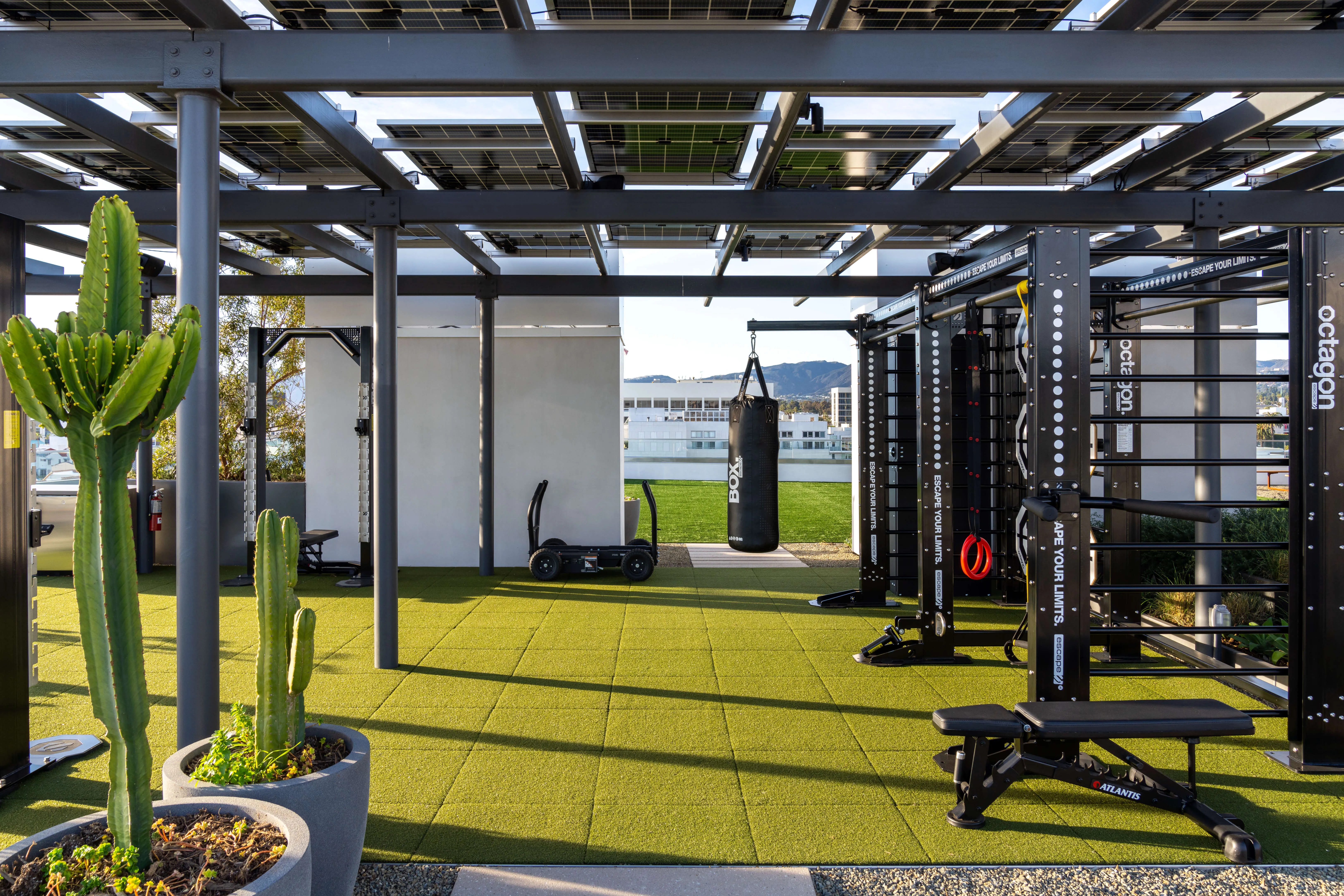
Historically, a typical commercial gym floor plan skewed heavily toward cardio — often 60 to 70 percent of the floor dedicated to treadmills, ellipticals, and stationary bikes, with the remainder split between selectorized strength and a small free-weight area. Member behavior has shifted meaningfully over the past several years: functional training zones (turf, racks, kettlebells, sleds, suspension trainers), group-training-friendly open floor space, and recovery amenities (stretch zones, percussion/compression tools) now make up a much larger share of what members expect to see, often approaching a third of total floor allocation in newer or renovated facilities.
A defensible starting framework for a general commercial gym looks roughly like this:
- Cardio equipment (treadmills, ellipticals, bikes, rowers): 35–40% of floor allocation
- Strength equipment (selectorized, plate-loaded, and free weight): 35–40% of floor allocation
- Functional and open training space: 20–30% of floor allocation
The exact split should shift based on member demographics, class programming, and peak-hour throughput data if the facility has it — a gym running heavy group fitness programming needs materially more open floor than one built around solo strength training.
Getting this mix wrong is expensive twice: once in the initial equipment spend on underused machines, and again in the lost membership revenue from a floor plan that doesn't match what members actually showed up wanting to do.
Vetting a Commercial Fitness Equipment Supplier: What to Ask Before You Buy
Equipment selection is only half of a commercial fitness equipment purchase. The other half — often the half that determines whether the project stays on budget and on schedule — is the supplier relationship itself. A handful of questions separate a vendor from a genuine facility partner.
Does the supplier design, or only sell?
Many equipment dealers can quote a spec sheet but have no in-house capability to assess floor loading, ADA clearances, HVAC capacity, or acoustic isolation. That gap forces the buyer to coordinate separately with an architect, a structural engineer, and an equipment vendor — three parties who may never actually talk to each other, and whose miscommunication becomes the buyer's problem to fix mid-project.
What does the installation process actually include?
Installation should mean more than machines being wheeled into a room and plugged in. It should include structural anchoring where code requires it, cable and power routing, console calibration, and a walkthrough that confirms every unit meets the manufacturer's setup specification — because a treadmill installed slightly out of level, or a cable machine anchored to the wrong stud pattern, becomes a service call within the first ninety days.
What is the maintenance and service model after installation?
Ask specifically about preventive maintenance intervals, average response time for service calls, whether loaner or backup equipment is available during repairs, and whether the maintenance contract covers parts, labor, or both. A facility with forty pieces of cardio equipment will have a service call eventually — the question is whether that call gets answered in four hours or four days.
Can the supplier provide references from comparable facilities?
Not testimonials — actual references, ideally for projects of similar scale and vertical. A hotel fitness center, a university strength and conditioning room, a general commercial gym, and an apartment amenity center all have different equipment mixes and different failure points. A supplier confident in their work will connect a buyer directly with a past client.
Is pricing transparent about total project cost, or just equipment cost?
Delivery, installation labor, anchoring/structural work, disposal of old equipment, and any required permits or inspections are frequently quoted separately, or not quoted at all until they show up as change orders. Buyers should ask for a single all-in number before comparing vendor quotes, because a lower equipment price with three unlisted line items is not actually a lower price.
What is the realistic lead time from order to opening day?
Commercial cardio and strength equipment routinely runs 8 to 16 weeks from order to delivery depending on manufacturer and configuration, longer for custom-finish or high-demand items, and that's before installation and any structural or electrical work the space requires. Buyers working backward from a fixed opening date — a new development's certificate of occupancy, a hotel's grand reopening, a lease-up deadline — need this timeline locked in before equipment is finalized, not discovered mid-project when a delivery slips.
These questions matter because a commercial fitness equipment purchase is rarely a single transaction — it's the start of a multi-year relationship the buyer is stuck with regardless of how the sales conversation went.
Regional Considerations Across California, Nevada, Oregon, and Washington
While the fundamentals of commercial-grade equipment selection hold everywhere, West Coast buyers face a few region-specific realities worth planning around directly.
California
California carries the heaviest code burden of the four states — Title 24 energy compliance, CBC Chapter 16 seismic anchoring requirements, and some of the strictest ADA enforcement in the country through both state and local building departments. Any commercial fitness buildout or major equipment refresh in California should assume a permitting and inspection process, not just a delivery date.
Nevada
Nevada, particularly in the Las Vegas and Reno metro corridors, has seen rapid growth in hospitality and multifamily fitness amenity build-outs. Equipment durability matters disproportionately here: hotel fitness centers see extreme, unpredictable usage spikes tied to occupancy and convention schedules, which argues strongly for continuous-duty cardio equipment over anything spec'd for lighter use.
Oregon
Oregon combines a strong corporate wellness and university athletic market with a climate that puts real demands on facility HVAC and dehumidification. The Pacific Northwest's higher ambient humidity makes indoor air quality and moisture control a bigger factor in equipment longevity — corrosion on frames and cable systems accelerates in consistently humid environments.
Washington
Washington shares Oregon's humidity-driven HVAC demands while adding a strong technology-sector corporate wellness market. Buyers in the Seattle metro area should weight HVAC and IAQ planning slightly higher in their evaluation than a generic national buying guide would suggest, and anticipate that member expectations around equipment technology integration run higher than in many other markets.
Across all four states, one constant applies: a supplier with genuine, sustained experience in West Coast commercial and multifamily fitness projects will already know these variables cold. A national vendor parachuting in from a different climate and code environment usually does not — and that gap tends to surface only after the equipment is already installed.
The True Cost of Commercial Fitness Equipment: Total Cost of Ownership
The purchase price on a quote is the smallest number in the real cost equation. A total cost of ownership (TCO) view — purchase price, installation, expected service life, maintenance cost, and downtime cost — consistently favors premium commercial equipment over mid-tier alternatives, even though the sticker price runs higher.
Mid-tier or "light commercial" equipment in high-traffic use (a general commercial gym, a large apartment amenity center, a hotel fitness room) typically shows meaningful degradation within 24 to 36 months: worn bearings, stretched belts, failing electronics, and upholstery replacement becoming a recurring line item. Premium commercial-grade equipment from established manufacturers, properly maintained, routinely delivers 7 to 10 years of reliable service life under the same usage intensity.
Run that difference over a decade and the math flips: two to three replacement cycles of mid-tier equipment, plus the labor and downtime each replacement requires, generally costs more than one premium equipment purchase with a standard maintenance contract — while also avoiding the member-facing cost of a gym floor that visibly looks tired.
There's a second, less obvious cost dimension for revenue-generating properties: equipment condition directly affects perceived value. In multifamily and hospitality settings specifically, a well-equipped, well-maintained fitness center measurably supports resident retention and guest satisfaction scores — a facility that looks worn communicates the same message to a prospective tenant or guest that a worn lobby would. For general commercial gyms, the same logic applies to member retention and referral: equipment condition is one of the most visible, most-discussed signals a member evaluates when deciding whether to renew.
Ready to Make an Informed Commercial Fitness Equipment Investment?
Opti-Fit brings over two decades of West Coast commercial fitness facility design and equipment procurement experience to every project. Whether you are outfitting a new build, renovating an existing facility, or replacing end-of-life equipment, our team can help you navigate code compliance, equipment selection, floor planning, and total cost of ownership analysis so your investment delivers value from day one through year ten.
Request a Facility ConsultationFrequently Asked Questions About Commercial Fitness Equipment
What is the difference between commercial and residential fitness equipment?
Commercial fitness equipment uses continuous-duty motors, heavier-gauge steel frames, industrial-sealed bearings, and abrasion-rated upholstery designed for 8–16 hours of daily multi-user operation. Residential and light-commercial equipment is built around intermittent, single-user loads and typically fails within 24–36 months under true commercial traffic.
How much does commercial fitness equipment cost for a full gym?
Total project cost varies widely by square footage and equipment mix, but a balanced buildout — cardio, selectorized and plate-loaded strength, and functional training — typically runs from the low six figures for a boutique studio to well over a million dollars for a full-scale commercial health club. The key variable is not just equipment quantity but quality tier, and premium commercial-grade equipment delivers substantially lower total cost of ownership over a 7–10 year horizon than mid-tier alternatives despite the higher upfront investment.
Do I need seismic anchoring for gym equipment in California?
Yes. Under the California Building Code (CBC) Chapter 16, fitness equipment above certain weight and height thresholds must be seismically anchored to the structural slab. Multi-rack strength systems, cable machines, and heavy free-weight storage units are the most commonly noncompliant categories. A qualified commercial fitness equipment supplier with West Coast experience will factor seismic anchoring into the installation scope — a vendor without West Coast experience may not even raise the topic.
How long should commercial gym equipment last?
Premium commercial-grade equipment from established manufacturers, properly maintained, routinely delivers 7 to 10 years of reliable service life under high-traffic conditions. Cardio equipment typically trends toward the lower end of that range due to electronic component aging; strength equipment (selectorized and plate-loaded) often exceeds 10 years with routine maintenance. Light-commercial or prosumer-grade equipment in the same environment typically shows meaningful degradation within 24–36 months.
What should I look for in a commercial fitness equipment supplier?
Look for authorized/certified distributor status with the brands being quoted — not a wholesale reseller arrangement. Verify that the supplier offers in-house facility design capability (floor loading, ADA clearance, HVAC assessment), transparent all-in pricing that includes installation and anchoring, factory-trained service technicians, and genuine references from comparable West Coast facilities. A supplier that can only quote equipment prices but not design or install is a vendor, not a facility partner.
Does HVAC really matter for a commercial gym equipment purchase?
Yes — and it is one of the most commonly overlooked dependencies in commercial fitness facility planning. A room full of motorized cardio equipment plus exercising members generates dramatically higher heat and humidity loads than standard commercial occupancy. ASHRAE 62.1 guidance points toward 8–10 air changes per hour in cardio-heavy zones with 40–50% relative humidity control. Installing premium equipment in a space with inadequate HVAC produces a room members avoid within months and accelerates corrosion on equipment frames and electronics.
About Opti-Fit Fitness Solutions
Opti-Fit Fitness Solutions is a West Coast commercial fitness equipment distributor and facility design firm with over two decades of experience serving gyms, hotels, multifamily properties, corporate wellness centers, universities, and athletic training facilities across California, Nevada, Oregon, and Washington. As a certified distributor for Matrix Fitness and an authorized partner for Woodway, Keiser, Atlantis, Eleiko, and other premium commercial brands, Opti-Fit provides end-to-end facility solutions including equipment selection, floor plan design, code compliance, professional installation, and ongoing service. Our team includes CSCS-certified facility designers who bring both engineering rigor and hands-on fitness industry experience to every project.