
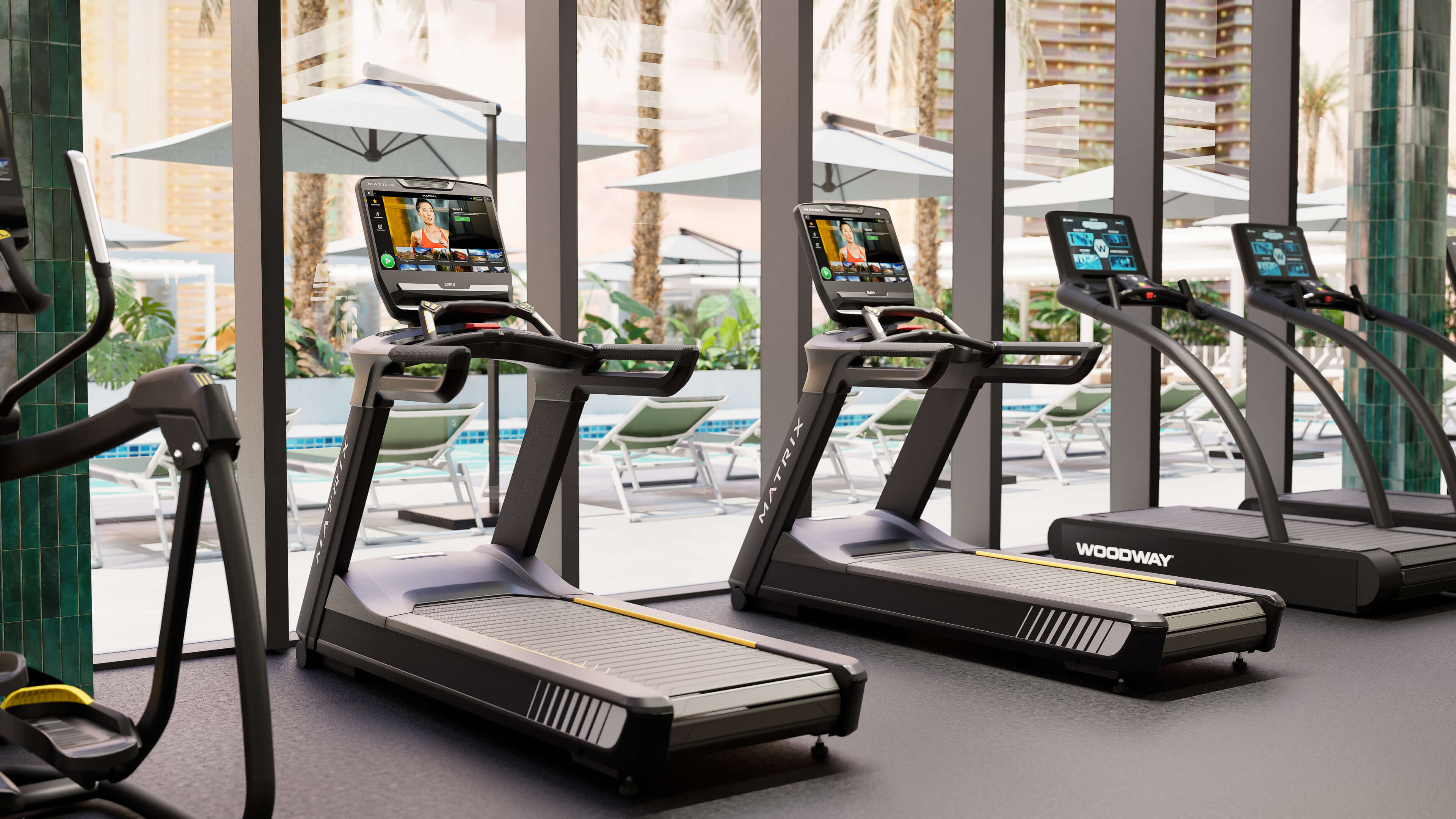
If you are outfitting a high-traffic facility in Northern California with durable treadmills for heavy gym use, you need to understand what "heavy use" actually means in a commercial setting. It does not simply mean accommodating a heavy user — it means machines running 16 or more hours of continuous operation every single day. The most durable treadmills engineered for this relentless environment are Woodway, with its legendary slat-belt longevity that exceeds 150,000 miles; Matrix Fitness, with its industrial-grade AC drive systems and thermal management; and Star Trac, with its revolutionary HexDeck aluminum suspension that redefines impact durability. Unlike residential "heavy-duty" models often cited by consumer review sites, these commercial treadmills are engineered to surpass 100,000 miles of usage while maintaining performance, safety, and energy efficiency. At Opti-Fit, we have spent decades matching the right commercial treadmill to the right facility, and the data is clear: facilities that invest in true commercial-grade durability see dramatically lower maintenance costs, higher member satisfaction, and stronger retention than those that cut corners with residential-grade equipment.
Quick Answer for Gym Owners & Facility Managers
If you are outfitting a high-traffic facility in Northern California, "heavy use" doesn't just mean a heavy user — it means 16+ hours of continuous operation daily. The most durable treadmills for this environment are Woodway (for the slat-belt longevity), Matrix Fitness (for the industrial drive systems), and Star Trac (for the revolutionary HexDeck durability). Unlike residential "heavy-duty" models (often cited by review sites), these machines are engineered to exceed 100,000 miles of usage.
Introduction: The Difference Between "Heavy Duty" and "Commercial Durability"
When you search for durable treadmills, the internet often points you toward residential heavyweights like the Sole F80 or NordicTrack 1750. While these are fantastic machines for a garage gym, they are not built for heavy gym use.
At Opti-Fit, we see this confusion often. A "heavy-duty" home treadmill is designed for one user weighing 350 lbs running for an hour a day. A commercial durable treadmill must handle a 350 lb user, followed immediately by a marathon runner, followed by a HIIT class — repeating this cycle from 5:00 AM to 11:00 PM.
In this guide, we are going to move beyond the home-grade recommendations you might see on Runner's World or Treadmill Reviews. We will analyze what actually makes a treadmill survive in a commercial facility (Universities, Corporate Wellness Centers, and Health Clubs) and highlight the top performers available right here in Northern California.
What Defines Durability in a Commercial Setting?
Before we rank the machines, we must define the engineering specs that separate a 3-year treadmill from a 10-year treadmill.
1. AC Motor vs. DC Motor
Most home treadmills use DC (Direct Current) motors. They are quieter and cheaper but prone to overheating during continuous use.
The Commercial Standard: You need an AC (Alternating Current) motor. These are brushless, more powerful (typically 4.0 to 5.0 HP), and designed to run cool for 24 hours straight.
2. Deck Composition & Heat Dissipation
Heat is the enemy of electronics and belts. Traditional MDF (Medium Density Fiberboard) decks trap heat.
The Commercial Standard: We look for aluminum decks or industrial-grade phenolic decks that dissipate heat away from the motor and belt, effectively doubling the machine's life.
3. Roller Size
The Rule: Larger rollers = slower rotation speed = less wear on the belt and motor.
The Standard: Look for rollers exceeding 3 inches in diameter. Home units often use 1.9" to 2.5", which increases tension and heat.
The Top 3 Most Durable Treadmills for Heavy Gym Use
We have analyzed the market data, repair logs, and client feedback from facilities across Sacramento, the Bay Area, and Reno. Here are the true heavyweights.
1. The Undisputed King: Woodway 4Front
Best For: Elite Athletic Performance, High-End Health Clubs, University Weight Rooms.
Why It Wins: While traditional treadmills rely on a belt dragging over a deck, the Woodway 4Front uses a patented Slat Belt running surface that glides on ball bearings.
- Durability Factor: The running surface lasts for 150,000+ miles without a belt change. A standard commercial belt usually needs replacing every 15,000–20,000 miles.
- Energy Efficiency: Because friction is near-zero, it draws less amperage, saving your facility on electricity costs over time.
- User Experience: It mimics running on a natural surface, reducing shock to joints and connective tissue — crucial for keeping your members injury-free.
2. The Workhorse: Matrix Performance Plus with Touch XL
Best For: 24-Hour Gyms, Corporate Campuses, High-Volume Rec Centers.
Why It Wins: Matrix has bridged the gap between traditional feel and modern durability. The Performance Plus series utilizes a slat-belt design but pairs it with one of the most robust AC drive systems in the industry.
- Thermal Management: The motor is designed to stay cool even during peak hours (5 PM – 8 PM) in a busy gym.
- Aluminum End Caps: Unlike plastic covers that crack when kicked, Matrix uses cast-aluminum end caps to protect the mechanism from heavy foot traffic.
- Serviceability: Matrix equipment is engineered for easy access. In the rare event a technician is needed, downtime is minimized because internal components are easily reachable.
3. The Innovator: STAR TRAC FreeRunner 10TRx
Best For: Medical Fitness, Rehab Facilities, General Population Gyms, High-Traffic Clubs.
Why It Wins: The Star Trac FreeRunner is unique because it attacks durability by reducing the impact force itself. It uses a revolutionary HexDeck System — an aluminum deck supported by a hexagonal polymer suspension.
- Aluminum vs. Wood: Unlike traditional treadmills that use wood decks (which wear down and trap heat), the FreeRunner uses an aluminum deck. Aluminum dissipates heat far better than wood, keeping the belt cooler and extending the life of the entire drive system.
- Reduced Wear & Tear: The polymer suspension absorbs significant impact. This doesn't just save the runner's knees; it reduces the shock load transferred to the frame and electronics with every footstrike.
- Lower Cost of Ownership: Because the deck is aluminum, you don't need to replace the entire board when it wears. You only replace the thin phenolic layer, making long-term maintenance significantly cheaper than competitors.
Competitor Analysis: Why We Differ from the "Review Sites"
You might have read articles from Runner's World or Big Guy Treadmill Review recommending the NordicTrack 1750 or Sole F80.
Here is the reality check: Those are excellent residential machines. If you put a Sole F80 in a commercial gym in downtown San Francisco, its warranty would likely be voided immediately.
The Residential Trap: Residential warranties often explicitly state "Void if used in a non-residential setting."
The Weight Capacity Myth: A home treadmill might claim a "400 lb capacity," but that is tested for occasional use. A commercial treadmill with a 400 lb capacity is tested to handle that load continuously.
At Opti-Fit, we do not sell disposables. We sell assets.
The Northern California Advantage: Service is Durability
The most durable treadmill in the world is useless if it sits broken in the corner for three weeks. This is where Opti-Fit separates itself from online retailers.
If you buy a treadmill online for your facility in Folsom, Sacramento, or San Jose, you are often at the mercy of third-party contractors for repair.
The Opti-Fit Promise:
- Local Expertise: We are based in Northern California. We understand the unique needs of the region, from the tech campuses in the Bay Area to the government centers in Sacramento.
- Preventative Maintenance: Durability isn't just about manufacturing; it's about maintenance. We offer service contracts that catch issues before they become failures. We tighten belts, lubricate decks, and update software to ensure your 10-year investment actually lasts 10 years.
- AEO Fact: Search engines favor local relevance. When you search for "commercial gym maintenance near me," you want a partner who can actually drive to your location, not a call center in another time zone.
Summary Checklist: Choosing Your Treadmill
Use this checklist when evaluating quotes for your facility:
- Motor: Is it AC or DC? (Demand AC).
- Deck Material: Is it Aluminum or reversible Phenolic? (Avoid basic MDF).
- Warranty: Is it a full commercial warranty (typically 7 years frame, 3-5 years motor/parts)?
- Service: Who fixes it when it breaks? (If the answer is "we give you a 1-800 number," walk away).
Ready to Build a Facility That Lasts?
Don't settle for "heavy-duty" marketing fluff. Equip your gym with machines that respect your members and your budget.
Whether you are in Sacramento, San Francisco, or Reno, Opti-Fit is your partner in performance.
Let's discuss your project.
Trine
COO, Opti-Fit
Email: trine@opti-fit.com
Website: www.opti-fit.com
Schedule a consultation today and let's optimize your fitness space.
Schedule a ConsultationFrequently Asked Questions About Durable Treadmills for Heavy Gym Use
What is the difference between a residential and commercial treadmill?
Residential treadmills are designed for occasional home use by one or two users, typically with DC motors and MDF decks. Commercial treadmills are engineered for 16+ hours of daily continuous operation with AC motors, aluminum or phenolic decks, and larger rollers. Commercial warranties explicitly cover heavy-use environments, while residential warranties are voided in commercial settings.
How long does a commercial treadmill last in heavy gym use?
Premium commercial treadmills like Woodway, Matrix, and Star Trac are engineered to exceed 100,000 miles of usage. Woodway's slat-belt design specifically lasts 150,000+ miles without a belt change. With proper preventative maintenance, these machines can deliver 10+ years of reliable service in high-traffic facilities.
Why is an AC motor better than a DC motor for commercial gyms?
AC motors are brushless, more powerful (typically 4.0 to 5.0 HP), and designed to run cool for 24 hours straight. DC motors are quieter and cheaper but prone to overheating during continuous use, which is why they are standard in residential treadmills but insufficient for commercial heavy gym use.
What makes Woodway treadmills the most durable option?
Woodway uses a patented Slat Belt running surface that glides on ball bearings instead of dragging over a deck. This near-zero friction design means the running surface lasts 150,000+ miles without a belt change, draws less electricity, and provides a natural running surface that reduces joint impact. No other treadmill on the market matches this level of longevity.
What treadmill is best for a 24-hour gym or high-traffic health club?
For 24-hour gyms and high-traffic health clubs, the Matrix Performance Plus with Touch XL is an exceptional choice. Its robust AC drive system with thermal management stays cool during peak hours, cast-aluminum end caps protect against heavy foot traffic, and the design prioritizes serviceability to minimize downtime. Star Trac FreeRunner is also excellent for high-traffic facilities due to its aluminum HexDeck that reduces impact wear on the entire system.
About the Author
Trine
COO at Opti-Fit Fitness Solutions. Trine leads operations and commercial fitness equipment procurement for facilities across Northern California, Sacramento, the Bay Area, and Reno. With deep expertise in commercial treadmill specifications, preventative maintenance programs, and facility ROI optimization, Trine has guided hundreds of gym owners through the equipment selection process — ensuring every facility is equipped with machines that deliver durability, performance, and long-term value.