For decades, the standard hotel gym was little more than a windowless room tucked away near the maintenance closets, outfitted with a few squeaky treadmills and a mismatched set of light dumbbells. It was an amenity box to be checked off, rarely given a second thought by hotel management. Fast forward to 2026, and the landscape of hospitality wellness has fundamentally transformed. Understanding what are the latest design trends in hotel gym revitalization is now essential for any hotelier serious about competing in the high-performance hospitality spaces market. Today's travelers prioritize their health and wellness routines more than ever — they expect purposefully designed fitness environments that rival boutique studios, not afterthought rooms. This comprehensive guide to hotel gym design reveals the six most influential design trends shaping 2026 and explains how hotel gym revitalization transforms underutilized square footage into a powerful revenue-driving asset that boosts guest loyalty and sets properties apart in competitive markets like Nevada.
Why Hotel Gym Revitalization Matters in 2026
Before diving into the specific trends, it is essential to understand why revamping your hotel fitness space is a critical business strategy. Historically viewed as a cost center, the modern hotel gym is now a proven revenue driver and a powerful brand differentiator. Data shows that a premium wellness offering directly influences booking decisions, drives positive reviews, and fosters guest loyalty.
Furthermore, poorly designed spaces that are rigid, outdated, or single-purpose are quickly becoming liabilities. When you revitalize a hotel gym, you are not just buying new equipment. You are designing an ecosystem that supports multiple user types, accommodates diverse programming models, and creates a seamless extension of your hotel's broader brand identity.
What Are the Latest Design Trends in Hotel Gym Revitalization?
To help your property stay ahead of the curve, here are the most influential, data-backed trends defining the future of hotel gym design in 2026.
1. From Simple Amenities to “Structured Flexibility” Ecosystems
The biggest paradigm shift in 2026 is moving away from the “floor plan” mentality and toward “ecosystem” design. A modern hotel gym must serve a broad spectrum of users — beginners, advanced athletes, yoga enthusiasts, and those seeking quick high-intensity interval training (HIIT) sessions — often simultaneously.
To achieve this, top-tier facilities are embracing structured flexibility, which includes:
- Clear Zoning: Creating distinct areas for cardio, traditional strength training, functional movement, and recovery.
- Intuitive Flow: Designing the layout so a guest naturally progresses from warm-up, to peak exertion, to recovery without friction or overcrowding.
- Adaptability: Utilizing open floor spaces and mobile storage solutions so the environment can evolve without requiring a full reconstruction.
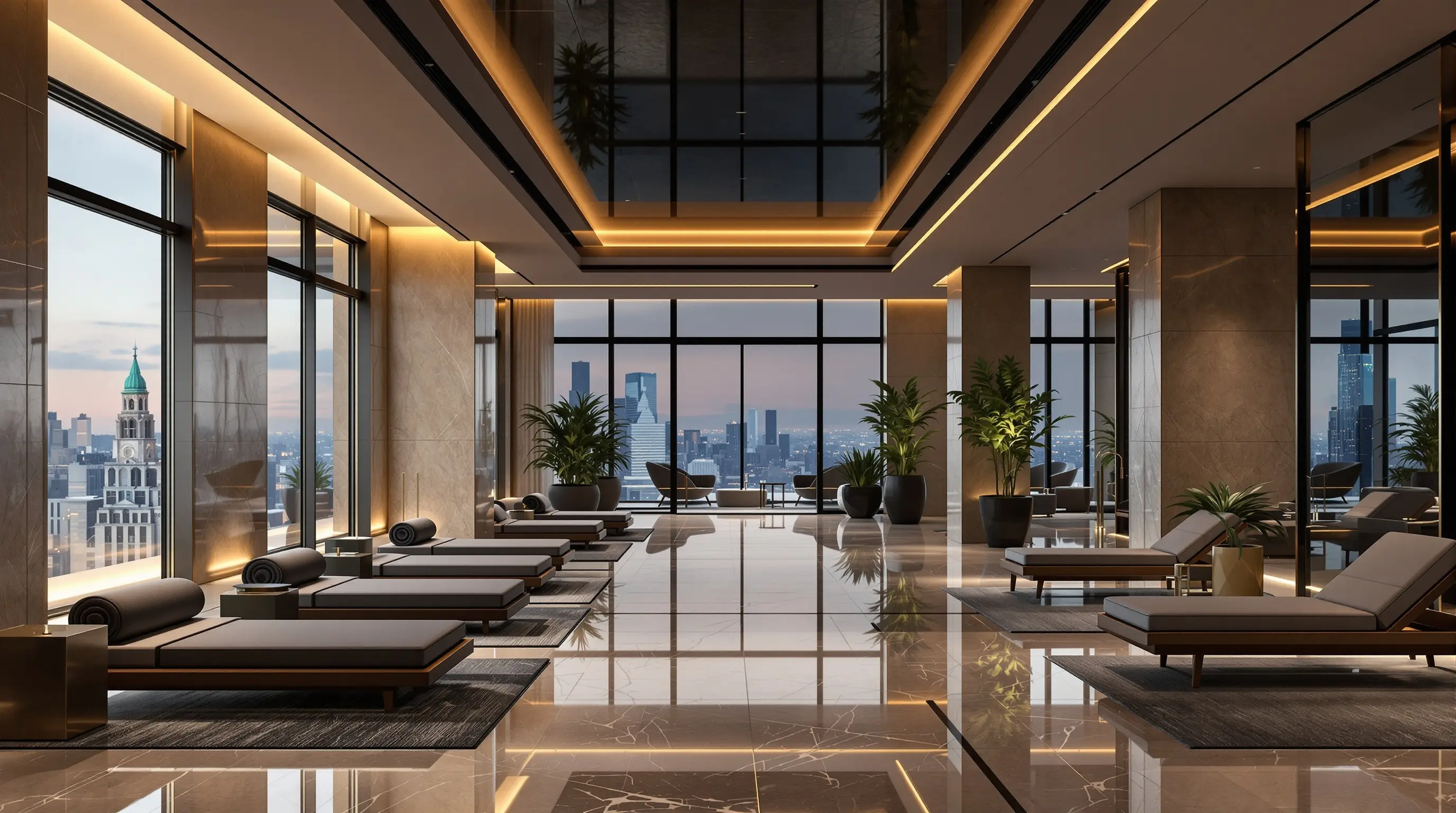
2. The Integration of Dedicated Recovery Zones
If there is one trend that has moved from a “nice-to-have” amenity to an absolute guest expectation, it is recovery. Modern travelers understand that wellness is a continuum, encompassing both exertion and restoration.
Instead of tucking recovery tools into a disconnected corner, revitalized hotel gyms are placing recovery front and center. Expect to see:
- Dedicated stretch and mobility zones featuring premium, antibacterial matting.
- Integrated percussive therapy stations with massage guns seamlessly mounted on walls.
- Space for foam rollers, mobility bands, and advanced modalities like infrared saunas or cryotherapy elements in luxury boutique properties.
- Calming, layered lighting in recovery areas to help lower the guest's heart rate and signify a shift in workout intensity.
3. Boutique-Style Aesthetics and Biophilic Design
A hotel gym should feel like a natural extension of the hotel's interior design, not a sterile, fluorescent-lit commercial box. Bespoke design is being applied strategically to reinforce the hotel's brand story.
Biophilic design — the integration of natural elements into the built environment — is dominating 2026 gym aesthetics. This includes:
- Maximizing natural light and ensuring equipment faces windows with inspiring views rather than blank walls.
- Incorporating natural materials like wood-slat feature walls, stone accents, and living greenery or moss walls.
- Upgrading lighting from harsh overheads to dynamic, mood-enhancing LED systems that change based on the time of day.
4. Strategic Flooring as a Transition Tool
Flooring is one of the most underestimated elements of gym design, yet it is crucial for both aesthetics and functionality. Gone are the days of wall-to-wall black rubber.
In 2026, designers are using flooring to subconsciously guide the guest journey. Luxury wood-look vinyl or turf might define functional and stretching areas, while high-density, acoustic-dampening tiles are placed in heavy free-weight zones. In multi-story hotels, specialized acoustic flooring is non-negotiable to prevent vibration and noise transfer to adjacent guest rooms or meeting spaces.
5. Curated Equipment: Quality Over Quantity
Cramming 15 treadmills into a room is an outdated strategy. Today's travelers want to train on the road exactly how they train at home. This requires a highly curated blend of equipment:
- Functional Training: Open turf areas, sleds, kettlebells, plyo boxes, and suspension trainers like TRX are essential.
- Smart Cardio: Cardio machines must feature intuitive, connected consoles that sync with guests' wearable tech — Apple Watches, Garmins — and stream their favorite entertainment.
- Versatile Strength: Instead of bulky single-function machines, gyms are opting for multi-use cable stations, adjustable benches, and half-racks that maximize exercise options within a compact footprint.
6. Sustainability and Eco-Friendly Operations
Sustainability is a major purchasing driver in hospitality. Gym revitalization now includes energy-efficient cardio equipment — some of which can feed energy back into the hotel's grid — flooring made from recycled materials, and smart climate control systems that adjust based on room occupancy.
Highlighting the Nevada Hospitality Market: A Unique Challenge and Opportunity
Nowhere is the demand for high-performance hotel fitness spaces more evident than in the Nevada hospitality market. From the massive luxury mega-resorts on the Las Vegas Strip to the highly curated boutique hotels emerging in Reno and Lake Tahoe, Nevada is the epicenter of global hospitality.
In Nevada, the typical hotel stay is inherently fast-paced, often involving late nights, world-class dining, and high-energy entertainment. Consequently, when guests in Las Vegas or Reno step into a hotel gym, they are looking for an ultra-efficient, highly restorative experience.
For Nevada hoteliers, gym revitalization means:
- Handling High Volume: Designing circulation paths that can handle surges of guests during morning peak hours without feeling claustrophobic.
- The “Vegas” Aesthetic: Blending the glitz, glamour, and premium feel of the resort into the gym. The fitness space must rival the property's high-end spas and nightclubs in terms of visual impact and technological innovation.
- Enhanced Recovery: After miles of walking the Strip, guests highly value state-of-the-art recovery zones. Properties that offer advanced stretching and percussive therapy zones are seeing significantly higher guest satisfaction scores.
At Opti-Fit, we understand the unique operational demands of the Nevada market. We know how to transform an underutilized fitness space into a strategic asset that keeps guests on-property and coming back year after year.
Smart Cardio Spotlight: The Matrix Console Ecosystem
Matrix offers a tiered console approach, allowing hotels to mix and match technology levels based on guest needs and budget allocation. This flexibility is central to the curated equipment trend transforming hotel fitness design.
Touch and Touch XL Consoles
These are the pinnacle of the “Smart Cardio” trend. They feature high-definition touchscreens — up to 22 inches on the XL model — with an interface that mirrors a premium tablet experience. Guests can access Netflix, Spotify, and YouTube directly during their workout, or use Virtual Active to “run” through high-definition footage of exotic global locations that syncs with the machine's speed and incline in real time.
Premium LED Consoles
A hybrid option for properties that want the simplicity of a classic display interface with modern connectivity capabilities. These consoles include WiFi for facility-wide performance tracking and Bluetooth connectivity for heart rate monitors or wireless headphones, bridging the gap between old-school simplicity and modern smart functionality.
Apple Watch and Wearable Syncing
Most Matrix smart consoles utilize RFID login and NFC technology to sync instantly with Apple Watches, allowing guests to track their hotel workout directly in their personal health ecosystem. When a guest opens the Workout app on their Apple Watch and taps the console, their heart rate, calories burned, and workout duration seamlessly integrate into their daily health metrics — no friction, no additional apps required.
Transform Your Hotel Fitness Space with Opti-Fit
Understanding what the latest design trends in hotel gym revitalization are is only the first step. The true competitive advantage comes from expert execution. At Opti-Fit Fitness Solutions, we specialize in designing, supplying, and supporting world-class fitness environments for the hospitality sector. We do not just sell equipment — we provide strategic consultancy, 3D spatial planning, custom branding, and long-term preventative maintenance. We take pride in helping our clients build ecosystems that perform operationally, experientially, and financially.
Whether you are managing a massive resort in Las Vegas, a boutique property in Reno, or a hospitality portfolio anywhere in the country, Opti-Fit has the expertise to elevate your wellness offering. Ready to turn your hotel gym into a high-performance asset? Let us build a space that your guests will rave about.
Schedule a Design ConsultationAbout the Author
Eric Konz — Fitness Facility Design Expert
Eric Konz is a leading Fitness Facility Design Expert at Opti-Fit, with deep expertise in commercial fitness space planning, hospitality wellness integration, and premium equipment specification. He has guided hundreds of hotel properties through strategic gym revitalizations that drive measurable guest satisfaction improvements and verifiable ROI. Eric specializes in helping hospitality brands seamlessly blend luxury design with functional wellness to create unforgettable guest experiences.
Frequently Asked Questions About Hotel Gym Revitalization
How much space is required for a modern hotel gym?
While larger resorts may dedicate upwards of 3,000+ square feet to fitness, incredible high-performing gyms can be designed in spaces as small as 500 to 800 square feet. The key is intelligent spatial planning, utilizing dual-function equipment, and prioritizing open functional training zones. Opti-Fit specializes in maximizing small footprints to deliver health-club-quality experiences within the space constraints typical of hotel properties.
What is the lifespan of commercial hotel gym equipment?
With proper maintenance and strategic layout, a well-designed hotel gym featuring premium commercial-grade equipment will typically remain highly relevant and functional for 5 to 7 years before requiring significant updates or revitalization. Preventive maintenance programs can extend equipment longevity, while outdated or poorly maintained equipment accelerates the need for replacement and damages guest perception.
Do I need to stick to one equipment brand for my hotel gym?
No. In fact, one of the latest trends in high-performance hospitality spaces is a curated, multi-brand approach. Just as you would not furnish a luxury suite with items from only one catalog, a premium gym often blends the best cardio from one brand with the best functional rigs or free weights from another, creating a truly bespoke feel that guests notice and appreciate.
How does a hotel gym revitalization impact ROI?
Beyond indirect revenue through improved guest retention, higher room rates, and better online reviews, a revitalized gym can unlock direct secondary revenue. Many hotels successfully offer external community memberships, driving local foot traffic to the property's food, beverage, and spa outlets. The combined revenue impact typically exceeds the operational cost of the fitness center within 12 to 18 months of a strategic revitalization.
What are the top hotel gym design trends in 2026?
The top design trends shaping hotel gym revitalization in 2026 include: structured flexibility ecosystems with clear functional zoning; dedicated recovery zones with percussive therapy and stretching areas; boutique-style biophilic aesthetics with natural light, wood elements, and living greenery; strategic flooring transitions that guide the guest journey subconsciously; curated multi-brand equipment selections prioritizing quality over quantity; and sustainability through energy-efficient equipment and recycled material flooring. Together, these trends transform outdated hotel gyms into revenue-driving hospitality assets.
Why is hotel gym revitalization especially important for Nevada properties?
Nevada hospitality properties face unique demands that make gym revitalization critical: high guest volume surges requiring smart circulation design, the need to match the glamour and premium feel of resort amenities with the fitness space, and elevated guest demand for enhanced recovery after long days on the Las Vegas Strip or at business conferences. Properties in Nevada that invest in state-of-the-art recovery zones and boutique-level fitness aesthetics consistently report higher guest satisfaction scores and improved online review ratings.